CurbFlip Airport Parking: How to Skip the $40-a-Day Airport Lot
 You know the feeling. Your flight leaves at 6 AM, you are already cutting it close, and the economy lot is a half-mile from the terminal with a shuttle that runs “every 15 minutes” but never seems to arrive. Meanwhile, the daily rate keeps climbing: $30, $40, sometimes $50 a day if you are stuck in the garage. By the time you get back from a weeklong trip, parking has cost more than your plane ticket. There has to be a better way, and there is. CurbFlip airport parking connects drivers with homeowners and property owners who rent out their driveways, garages, and private lots near major airports. You get a guaranteed spot, upfront pricing, and rates that make the official lots look like highway robbery. Think of it as the Airbnb of parking, except instead of a vacation rental, you are booking a safe, affordable place to leave your car while you travel.
Table of Contents
- What Is CurbFlip Airport Parking?
- How to Book CurbFlip Airport Parking in 4 Simple Steps
- CurbFlip Airport Parking Rates vs. Official Airport Lots
- Is CurbFlip Airport Parking Safe and Reliable?
- Tips for a Smooth CurbFlip Airport Parking Experience
- The Host Side: Why These Airport Parking Spots Exist
- Frequently Asked Questions About CurbFlip Airport Parking
- Ready to Ditch the Airport Parking Lot?
What Is CurbFlip Airport Parking?
CurbFlip is a peer-to-peer parking marketplace. Property owners near airports list their unused spaces, driveways, garages, private lots, even a covered spot next to someone’s house, and drivers book those spaces by the day, week, or month. The platform handles the payment, the booking confirmation, and the communication, so there is no awkward handshake or cash exchange in a parking lot at 5 AM.
The range of options is wider than you might expect. One listing might be a homeowner’s garage near Hartsfield-Jackson in Atlanta, where the host works from home and keeps an eye on your car. Another might be a dedicated lot with EV charging, security cameras, and a shuttle to the terminal. Some hosts offer covered parking for travelers worried about hail or summer sun. Others include extras like Wi-Fi, car wash access, or an Uber pickup credit. You pick the spot that fits your budget and your needs.
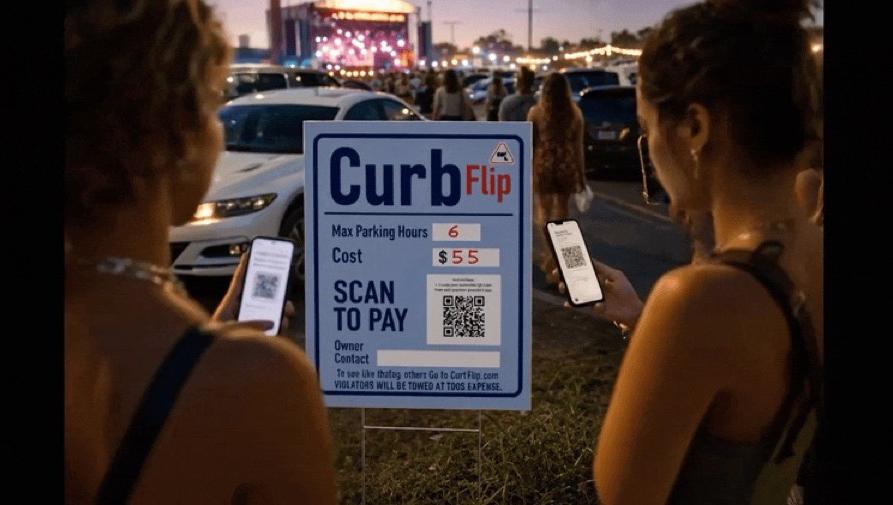
One feature that sets CurbFlip apart is the “Scan To Pay” parking sign. Hosts can place a physical sign with a QR code at their parking space. If you are driving toward the airport without a reservation and spot a CurbFlip sign, you can scan the code, pay on the spot, and park immediately. No app download required in that moment, no account setup, just a quick scan and you are done. It is the fastest last-minute parking solution you will find.
The platform covers major US cities and their airports: New York, Los Angeles, Atlanta, San Francisco, Chicago, Seattle, and more. If you are flying out of a hub city, there is a good chance someone nearby is renting a spot.
How CurbFlip Compares to the “Airbnb of Parking” Reputation
CurbFlip has described itself as the Airbnb of parking spaces since it launched in 2015, and the comparison is fair. Hosts set their own prices, availability, and rental terms. They decide whether to offer hourly, daily, weekly, or monthly rates. They choose what amenities to include and how to describe their space. For drivers, that means the market sets the price, not a parking monopoly that knows you have nowhere else to go.
There is one key difference from Airbnb that works in a driver’s favor: most CurbFlip listings do not carry the same minimum-stay pressure. While some airport listings require a 7-day minimum for long-term rates, many spaces are available by the day or even by the hour. You are not locked into a rigid structure. You book what you need, when you need it, and you pay a rate that reflects a real person’s driveway, not a corporate parking garage’s overhead.
How to Book CurbFlip Airport Parking in 4 Simple Steps
Booking a spot takes less than five minutes once you know what to look for. Here is the process from start to finish.
Step one: head to CurbFlip and search for your airport city. You can browse by city directly from the homepage, or use the search bar to narrow things down. If you are flying out of Atlanta, search Atlanta. If you are leaving from Sea-Tac, search Seattle. The platform shows you every available listing in that area.
Step two: filter by your travel dates and the duration you need. This is where you can also narrow by amenities. Need covered parking? Filter for it. Want a spot with EV charging? Check that box. Some hosts offer airport shuttle service or rideshare coordination, so look for those tags if you want a seamless trip to the terminal.
Step three: read the listing details carefully. Look at the photos, check the host’s description, and note any access instructions. Some hosts include helpful details like “I work from home so your car is safe with me” or “3-minute walk to the terminal.” These are real people offering real spaces, and the description often tells you exactly what to expect.
Step four: book and pay securely online. CurbFlip processes the payment, and you receive a confirmation with access details instantly. No cash, no checks, no wondering if your spot is actually reserved. If you are already near the airport and spot a CurbFlip “Scan To Pay” sign, you can skip the online search entirely and book on the spot by scanning the QR code.
What to Look for in a CurbFlip Airport Parking Listing
Not every listing is the same, and a little attention upfront saves headaches later. First, check the distance to the terminal. Some spots are genuinely walkable. Others require a short rideshare or a shuttle, and the host usually notes that in the description.
Look for amenities that matter to you. Covered parking protects your car from weather. Security cameras and vehicle monitoring add peace of mind. EV charging is a bonus if you drive electric and want to return to a full battery. Some hosts even offer airport shuttle service or coordinate an Uber pickup, which can save you the cost and hassle of arranging your own ride.
Read the host’s description thoroughly. The best listings include details about the neighborhood, access instructions, and any quirks of the space. A host who writes “I work from home so your car is safe with me” is telling you something valuable: someone is around, and the spot is monitored.
Finally, confirm the minimum booking duration. Some airport listings require a 7-day minimum to unlock the lowest daily rate. If you are only traveling for a long weekend, you may need a different listing or a slightly higher daily rate. Plan accordingly.
CurbFlip Airport Parking Rates vs. Official Airport Lots
The question every driver asks first: what does this actually cost? The answer is almost always “less than the airport lot,” often by a wide margin.
Take a real example. A CurbFlip listing near Hartsfield-Jackson Atlanta International Airport charges $11.50 per day for long-term airport parking, with a 7-day minimum booking. That comes to $80.50 for a full week. Now compare that to official airport parking at a major US hub. Economy lots at airports like JFK, LAX, O’Hare, and Sea-Tac routinely charge $25 to $50 per day. A week in an official lot can run anywhere from $175 to $350, and that is for the cheap section. Garage parking near the terminal often hits $40 to $60 a day, pushing a week’s total past $400.
The savings get even starker for monthly parking. CurbFlip supports 30-day minimum bookings at discounted daily rates. A month in a homeowner’s driveway or garage near the airport might cost a few hundred dollars. The same month in an official airport lot? You could be looking at a bill that rivals your rent. For extended trips, military deployments, or snowbirds heading south for the winter, the peer-to-peer option is not just cheaper, it is the only sensible choice.
Rates vary by city and property, of course. A spot near LAX might cost more than one near Atlanta. But the pattern holds across every city CurbFlip serves: peer-to-peer spots consistently undercut official airport lots, often by 50% or more.
How Much Does It Cost to Leave Your Car at the Airport for a Week?
Official airport lots at major US hubs typically charge between $150 and $350 for a week of parking, depending on the airport and whether you choose economy, garage, or valet. At some airports, the economy lot alone runs $25 a day, and that is before taxes and fees.
On CurbFlip, a week of airport parking near Atlanta runs about $80.50 based on the featured listing, and similar deals exist in other cities. The key is booking in advance and choosing a listing that offers weekly discounted rates. When a host sets a 7-day minimum, they usually drop the daily rate significantly, and that is where the real savings kick in.
Can You Park at the Airport for a Month?
Yes, and this is where CurbFlip airport parking really shines. The platform supports monthly rentals with a 30-day minimum, and hosts often offer steeply discounted daily rates for long-term stays. Official airport lots rarely offer true monthly rates, and when they do, the price is still high enough to make you wince.
A residential driveway or garage near the airport is often the smarter play for extended trips. Whether you are deploying, taking a long overseas assignment, or just escaping winter for a month, a peer-to-peer spot gives you a safe place to leave your car without draining your bank account. The host knows you will be gone a while, the rate reflects that, and you come back to a car that has been sitting in a quiet neighborhood instead of a sprawling, floodlit lot.
Is CurbFlip Airport Parking Safe and Reliable?
If you have never used a peer-to-peer parking platform, the trust question is probably top of mind. You are leaving your car with a stranger. How do you know the spot is real? How do you know your car will be there when you get back?
The booking and payment process is handled securely through CurbFlip. You pay online, you receive a confirmation, and there is a record of the transaction. No cash changes hands in a dark lot. No handshake deal you have to hope the other person remembers.
Many hosts add security features to their listings. Security cameras, vehicle monitoring, and even Wi-Fi are common value-added services. A host who works from home and lists that fact in their description is essentially offering built-in surveillance. Your car is not sitting in an anonymous row of thousands; it is parked in someone’s driveway or garage, often within sight of their front door.
CurbFlip has been operating since 2015, and the platform’s structure creates accountability on both sides. Hosts set their terms, drivers book upfront, and the platform sits in the middle. The review system, while still growing, gives you a way to check a host’s track record before you book. Look for listings with detailed photos and thorough descriptions. Communicate through the platform if you have questions. These small steps go a long way toward a smooth experience.
Tips for a Smooth CurbFlip Airport Parking Experience
A little preparation makes the difference between a stress-free trip and a frantic morning. Book your spot in advance, especially if you have an early flight. The best listings near major airports get snapped up, and you do not want to be searching for parking at 10 PM the night before you leave.
Screenshot your confirmation and access instructions before you head to the airport. Cell service can be spotty in parking garages and unfamiliar neighborhoods, and you do not want to be locked out of the details when you need them most.
If the listing mentions shuttle service or Uber coordination, reach out to the host before your departure day. Confirm the pickup point, the timing, and any instructions. A quick message can save you a long walk or a missed connection.
For long-term parking, let the host know your return date so they can hold the spot and expect your arrival. Most hosts appreciate the heads-up, and it ensures your space is ready when you get back.
If you are driving to the airport without a booking, keep an eye out for CurbFlip “Scan To Pay” signs near the terminal. They are the fastest last-minute solution, and they turn a stressful search into a 30-second transaction.
The Host Side: Why These Airport Parking Spots Exist
Understanding who lists these spaces helps explain why the model works so well. Most hosts are homeowners who live near an airport and have a driveway, garage, or extra lot space that sits empty during the day or while they travel. They list the space on CurbFlip to earn extra income, and they set rates that make sense for their neighborhood.
Many of these hosts are frequent flyers themselves. They know the pain of airport parking firsthand: the circling, the overpriced garages, the shuttle that never shows. They want to offer a better deal, and they often add thoughtful touches because they have been on the other side of the equation. When a host writes “I work from home so your car is safe with me,” they are not just filling space in a description. They are telling you they understand what matters: security, reliability, and a little human accountability.
These are real people offering a genuine local alternative. They are not a faceless parking corporation. They are your neighbors, or at least someone’s neighbors, and they have a spot you can use for less than the airport charges.
Frequently Asked Questions About CurbFlip Airport Parking
Is there a parking fee at the airport? Yes, and it adds up fast. Official airport lots charge daily rates that range from $15 for remote economy lots to $60 or more for terminal garages. CurbFlip offers an alternative with upfront, all-in pricing that typically runs well below those rates.
What is the best way to save on airport parking? Compare your options. Check the official airport lots, look at off-site parking companies, and then browse CurbFlip for peer-to-peer spots near your terminal. In most cities, the peer-to-peer option wins on price, and it often comes with added perks like covered parking or a personal point of contact.
Can I cancel or modify my CurbFlip booking? Cancellation policies are set by each host, not by the platform. Check the listing terms before you book so you know what flexibility you have. Some hosts offer free cancellation up to a certain date; others have stricter policies.
What happens if I arrive and the spot is not available? Contact the host through the platform immediately. CurbFlip’s structure holds hosts accountable for their listings, and the platform’s messaging system keeps a record of all communication. In the rare event something goes wrong, you have documentation and a clear path to resolution.
Ready to Ditch the Airport Parking Lot?
CurbFlip airport parking takes the stress, the cost, and the uncertainty out of leaving your car while you travel. You get a guaranteed spot at a rate that makes sense, booked online in minutes, with the kind of local convenience no parking garage can match. Whether you are flying out of New York, Los Angeles, Atlanta, San Francisco, Chicago, Seattle, or another major city, there is likely a driveway or garage nearby waiting for your car.
Check availability for your next trip. A weekend getaway, a weeklong vacation, a month on the road, whatever the duration, there is a spot that fits. As more hosts list their spaces, the network grows, and airport parking gets smarter. You can browse available parking spots by city right now and see what is available near your terminal. The days of circling a crowded lot at 5 AM are over.